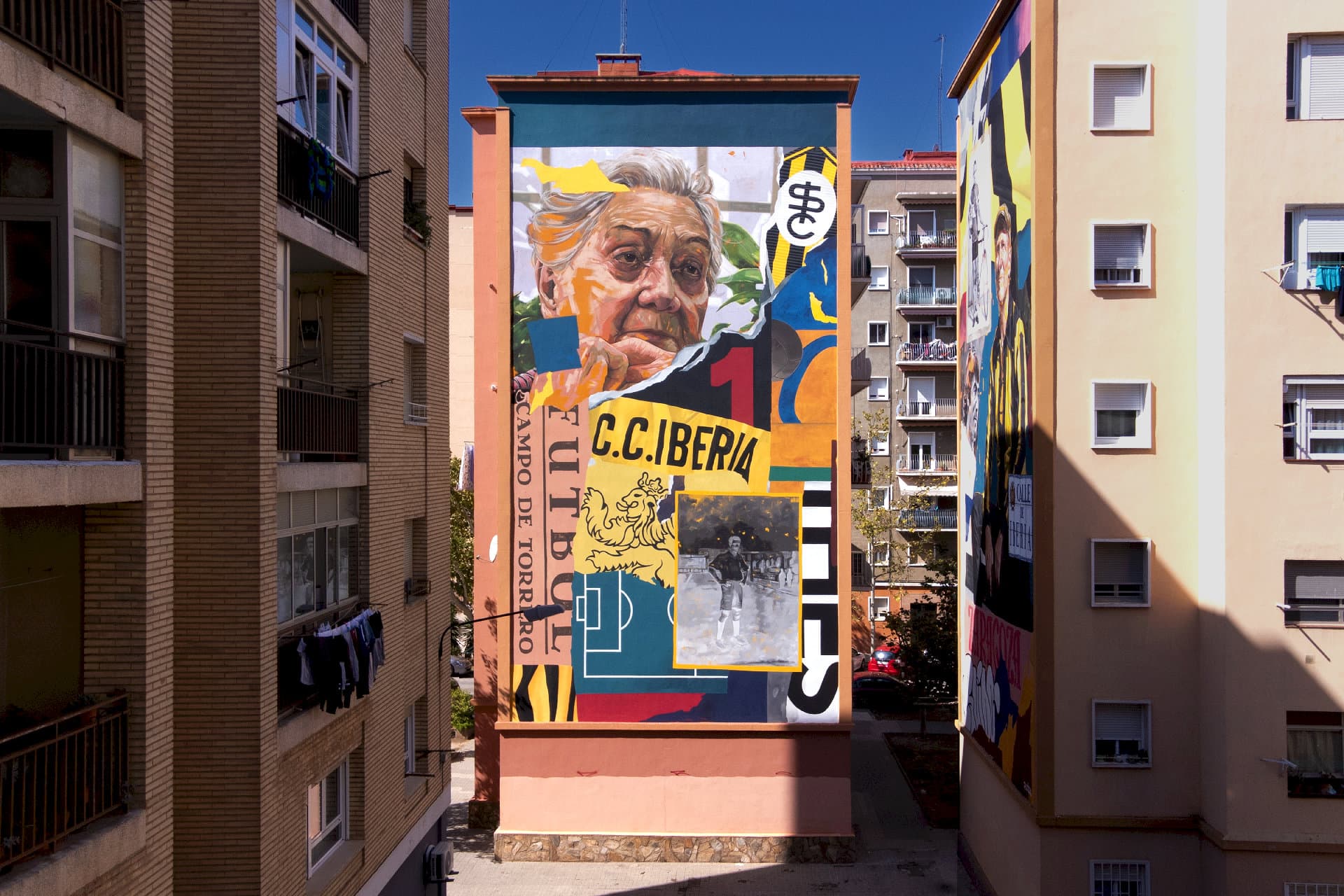
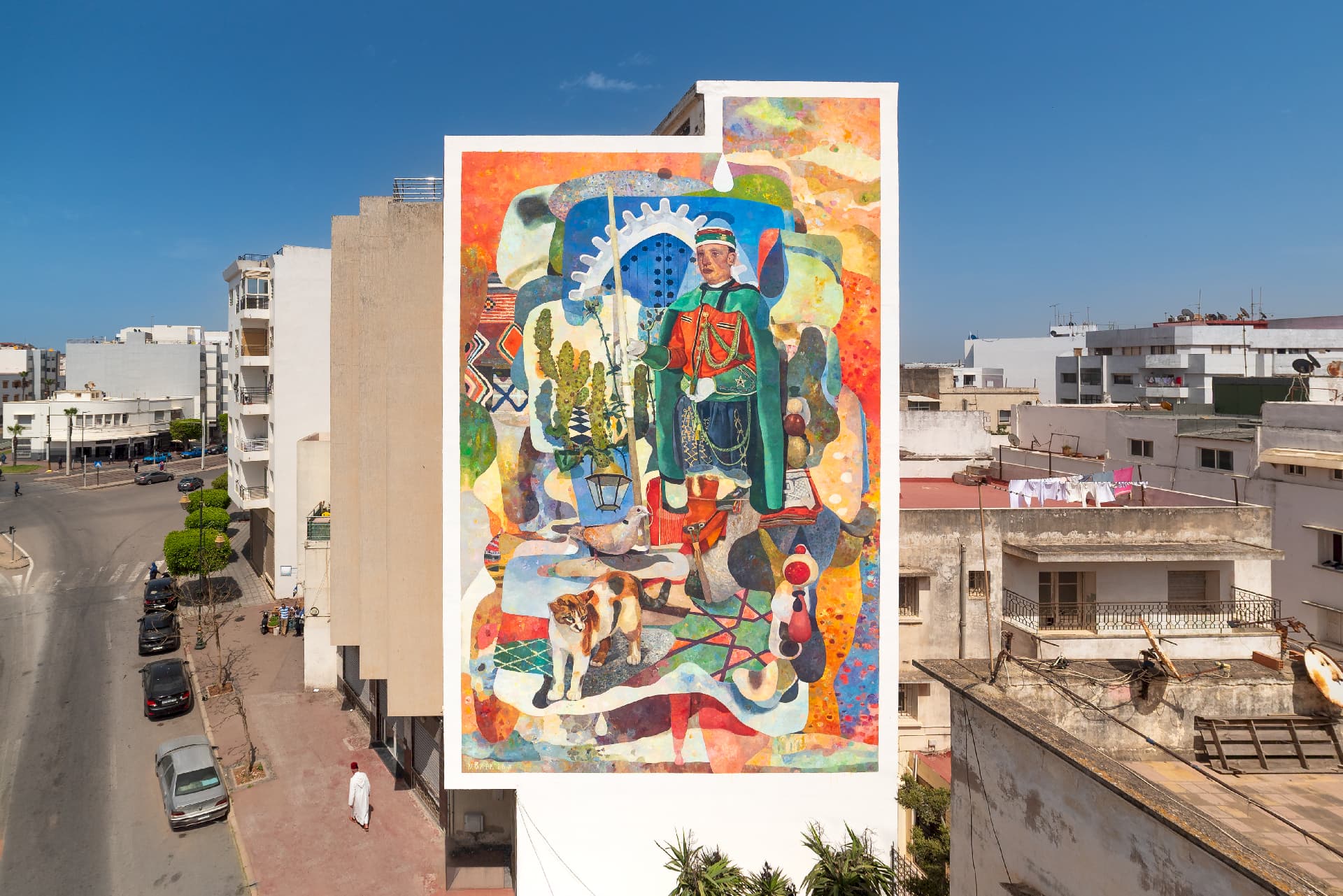
A multidisciplinary artist from Novosibirsk, Marat Morik is a leading figure on the international urban art scene. His work is defined by a sophisticated layering of techniques, combining figurative realism, geometric abstraction, and typography. His murals unfold as complex visual collages, where textures and colors deconstruct everyday imagery into fragmented narratives—each detail contributing to a story within the whole.
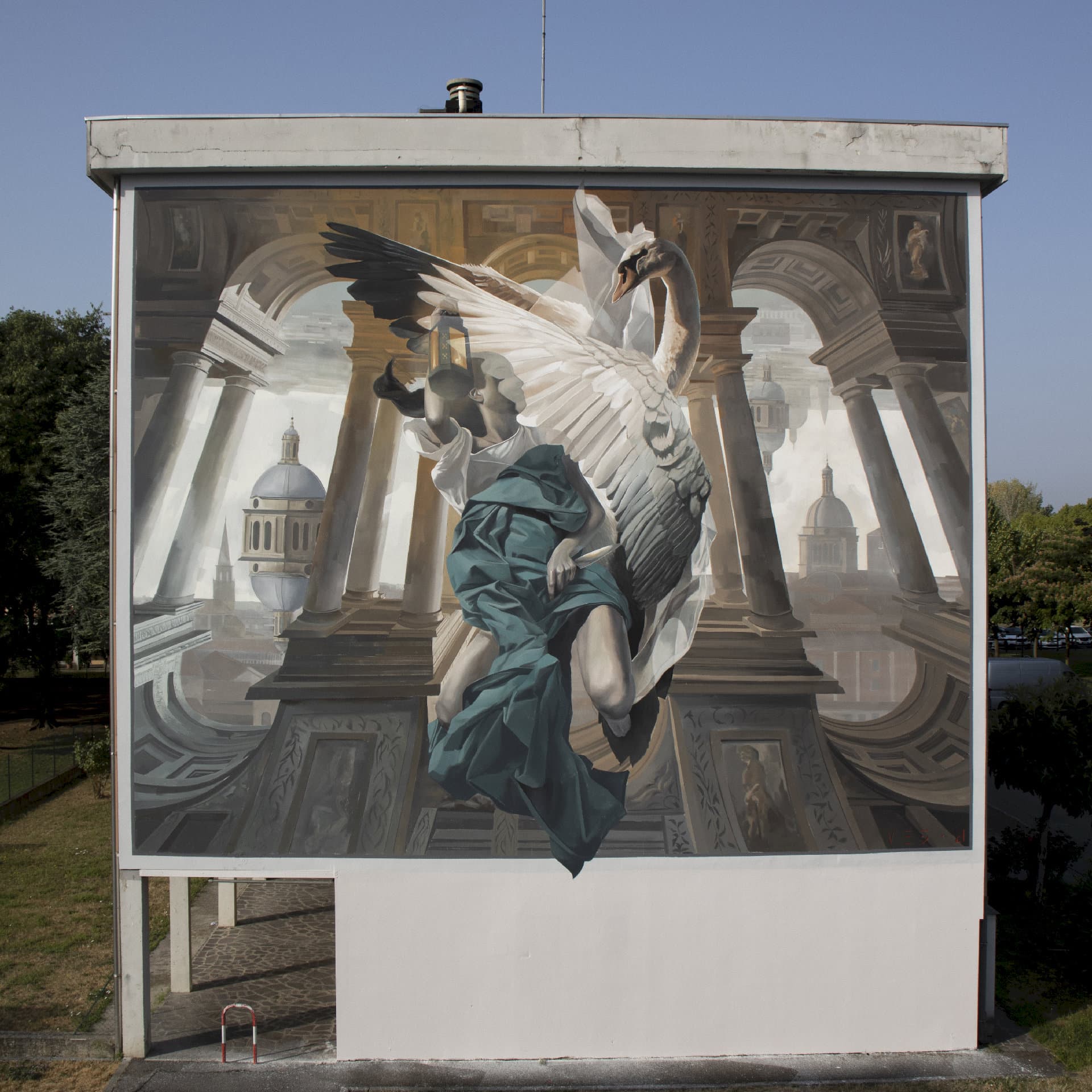
Drawing inspiration from Italian Futurism and sacred geometry, Vesod creates immersive compositions where time and space appear in constant flux. His works are characterized by crystalline structures, dynamic perspectives, and a precise visual language that fractures and reconfigures the human figure. Bridging classical influence and contemporary vision, his murals open portals onto parallel dimensions.

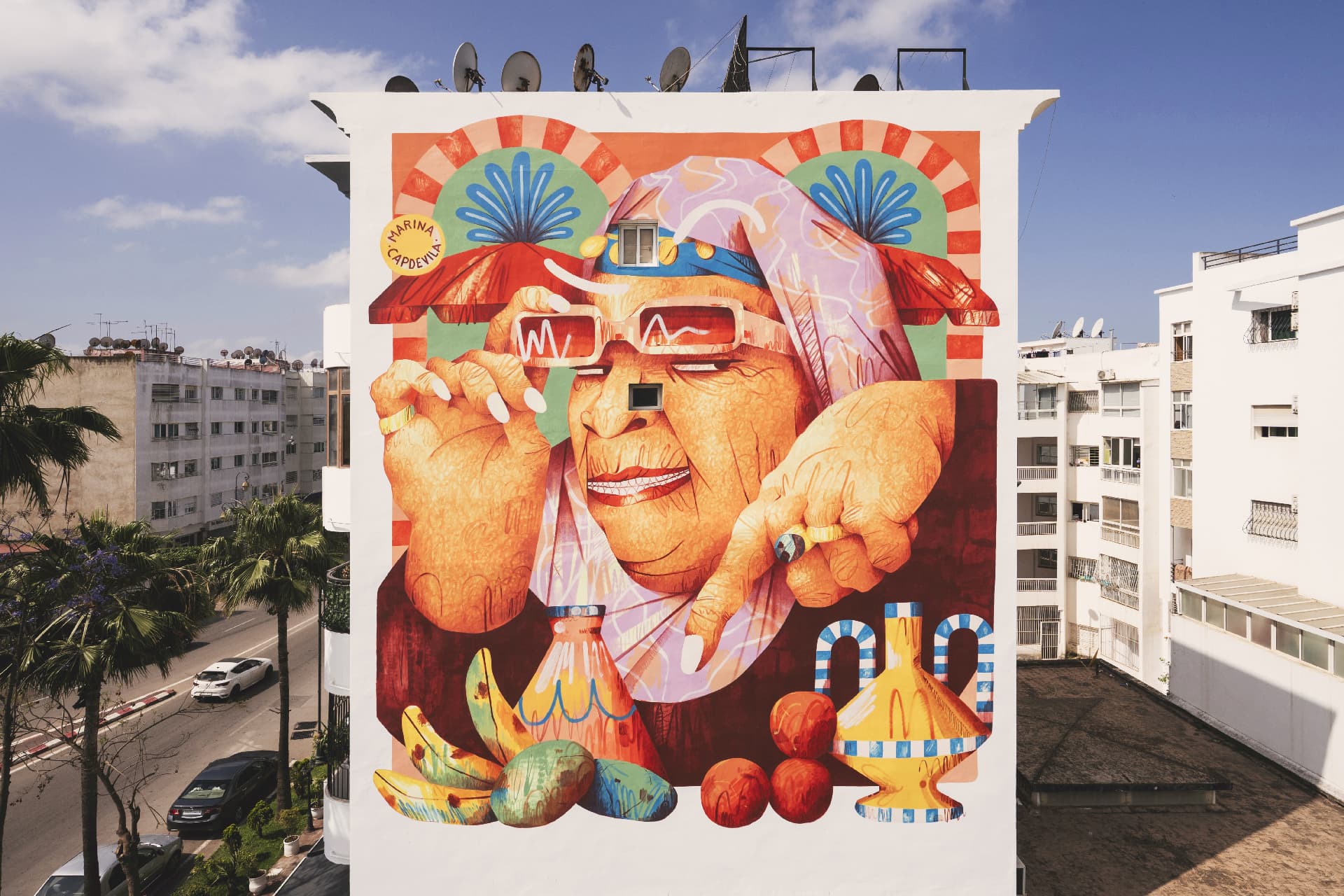
Catalan artist Marina Capdevila brings humor, warmth, and irreverence to the urban landscape. Her work centers on elderly figures portrayed with vitality and playfulness, often in unexpected or subversive situations. Through bold colors and expressive forms, she challenges conventional narratives around aging, celebrating imperfection and the richness of lived experience.

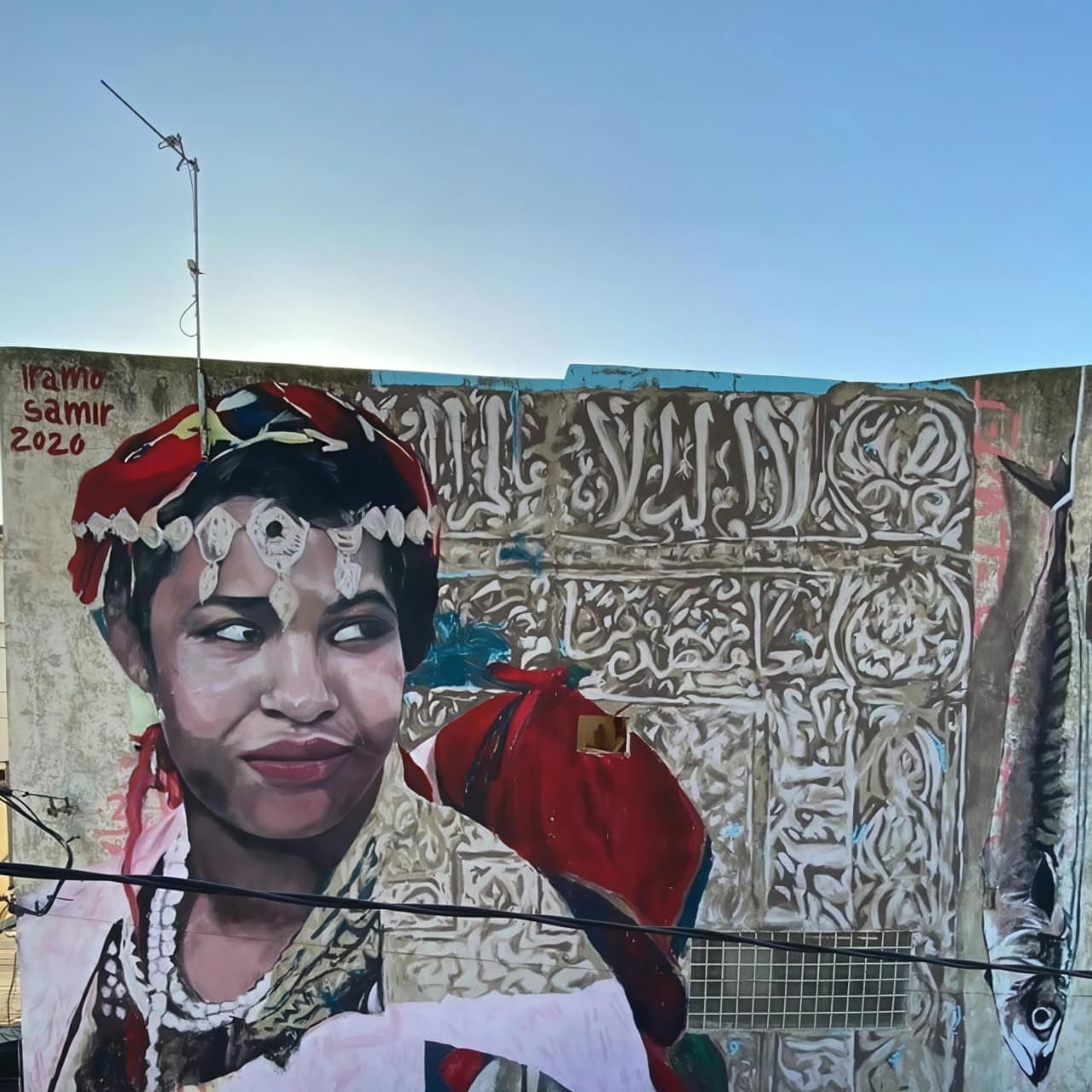
Moroccan visual artist Iramo develops a striking graphic language rooted in popular iconography and the contrasts of contemporary society. His compositions—often defined by bold outlines and carefully balanced color fields—capture suspended moments charged with narrative tension. His work offers a contemporary reinterpretation of Moroccan identity through a sharp and engaging visual lens.

The Portuguese collective Ruído, founded by artists Draw and Alma, explores the intersection between academic drawing and raw graffiti. Their collaborative process produces a distinctive visual harmony, where detailed portraiture meets the spontaneity of gestural mark-making. Often working in restrained or earthy palettes, their murals engage with memory, place, and identity, creating a subtle yet powerful dialogue with their surroundings.

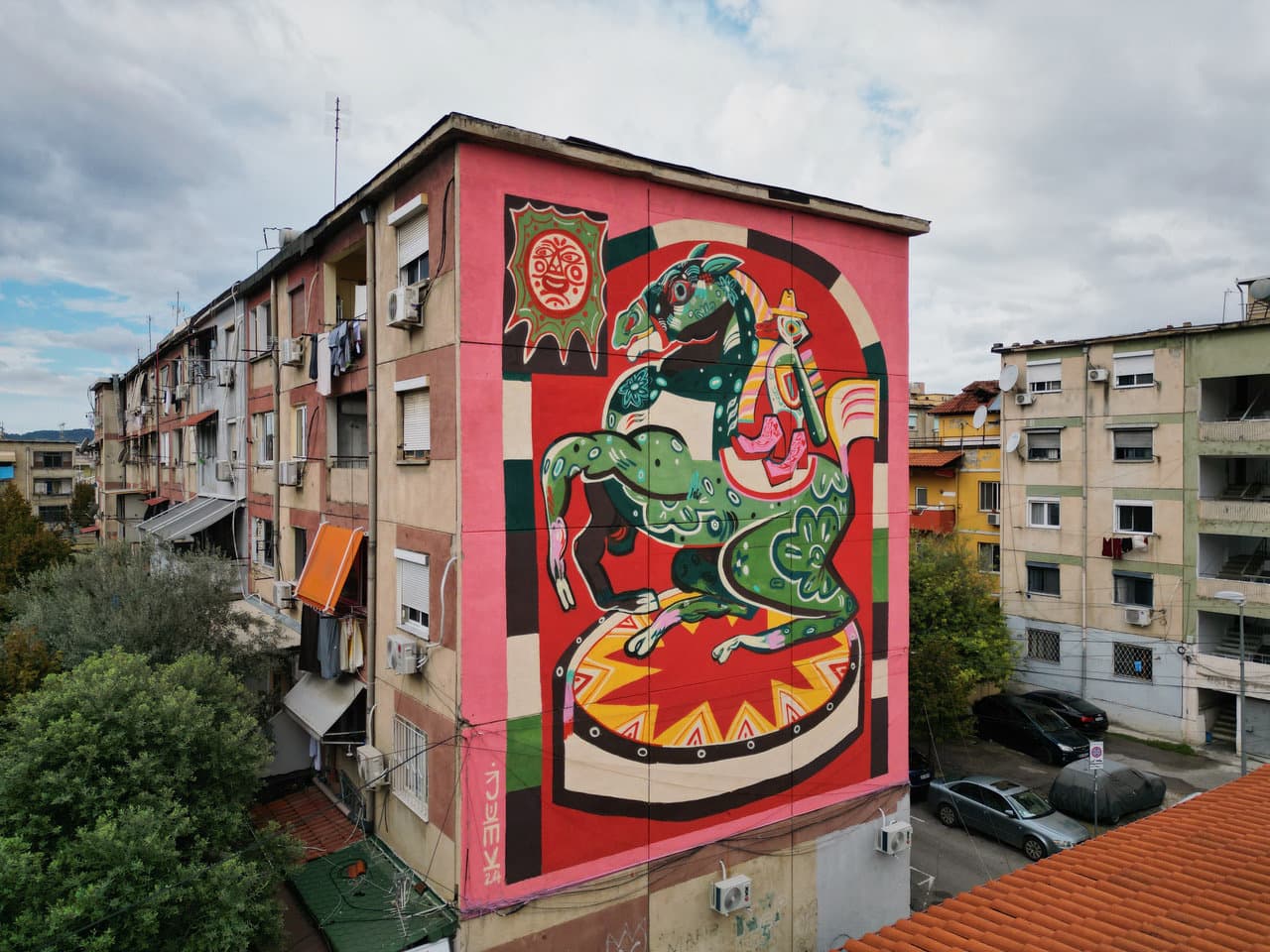
Peruvian-Chilean artist Jumu Monster infuses walls with a vibrant, ritualistic energy. Her work draws on pre-Columbian heritage, featuring hybrid creatures, symbolic masks, and organic motifs. Through earthy tones and intricate compositions, she builds bridges between ancestral mythologies and contemporary urban environments.

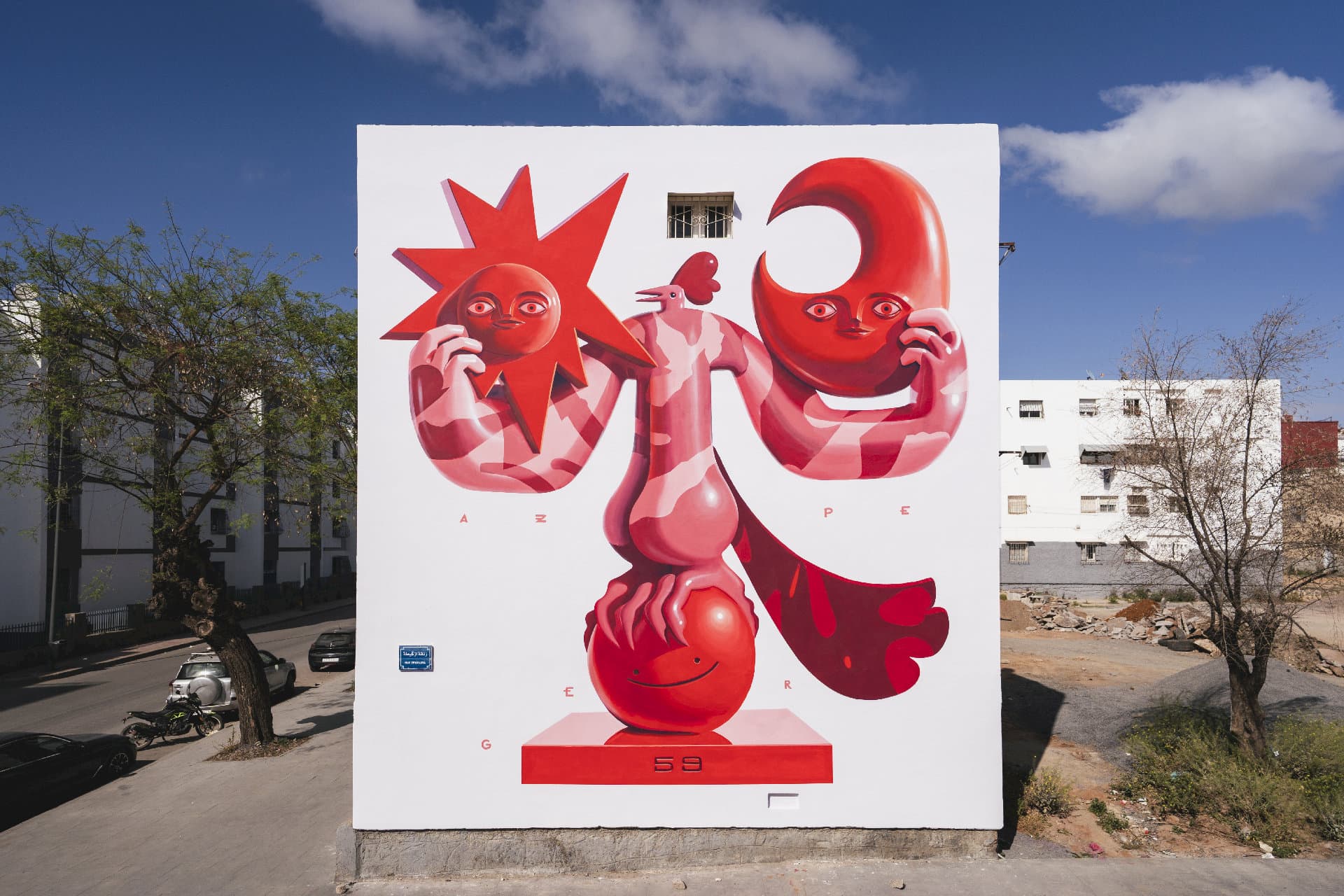
Azpeger approaches graffiti through an architectural and deconstructive lens. His practice revolves around the manipulation of letterforms and structures, evolving toward dynamic abstraction. His compositions challenge the flatness of the wall, creating illusions of depth, movement, and multidimensional space.

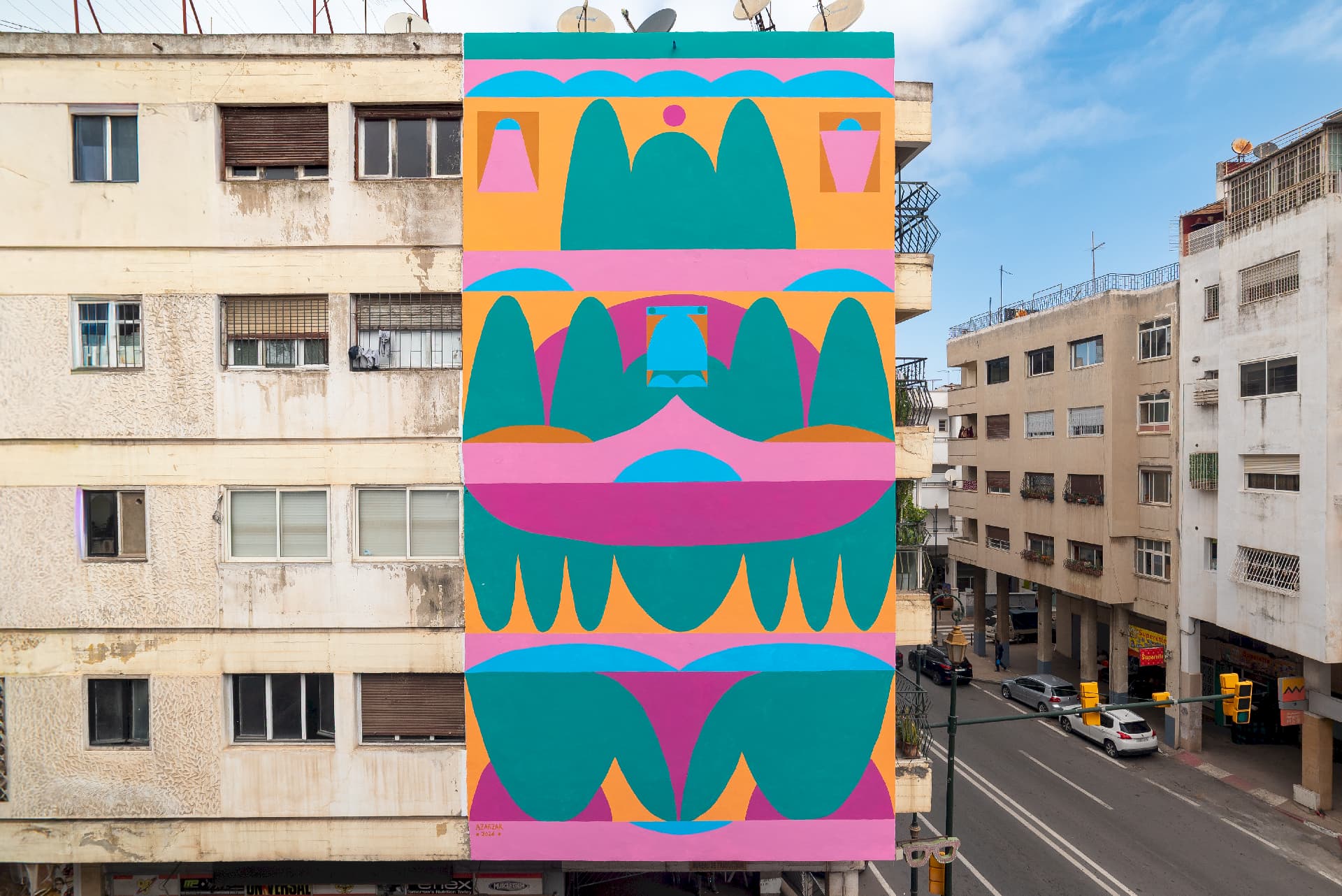
Working at the crossroads of graphic design, illustration, and anthropology, Nassim Azarzar explores contemporary visual culture through a research-driven approach. His project Bonne Route draws from the aesthetics of Moroccan transport trucks and popular signage. At Jidar, he extends this exploration, transforming familiar symbols into a renewed artistic language rooted in cultural memory.

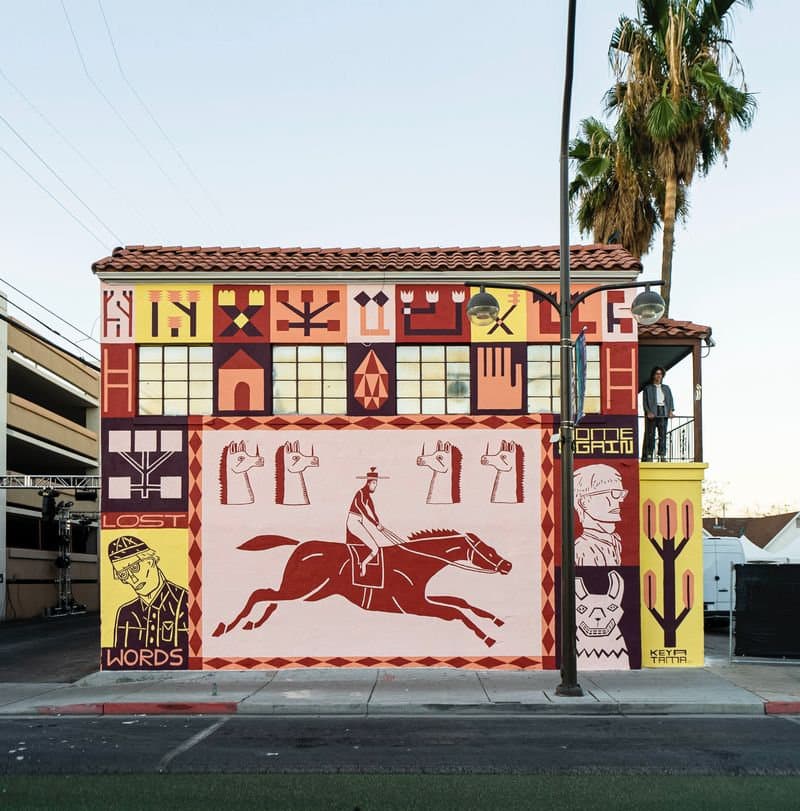
Keya Tama is a multidisciplinary artist whose work evokes the intimacy of miniature painting and the narrative depth of tapestry. Defined by simplified forms, iconic silhouettes, and a restrained palette, his compositions explore themes of human connection, vulnerability, and resilience. His murals read as contemporary visual fables—quiet, poetic, and timeless.

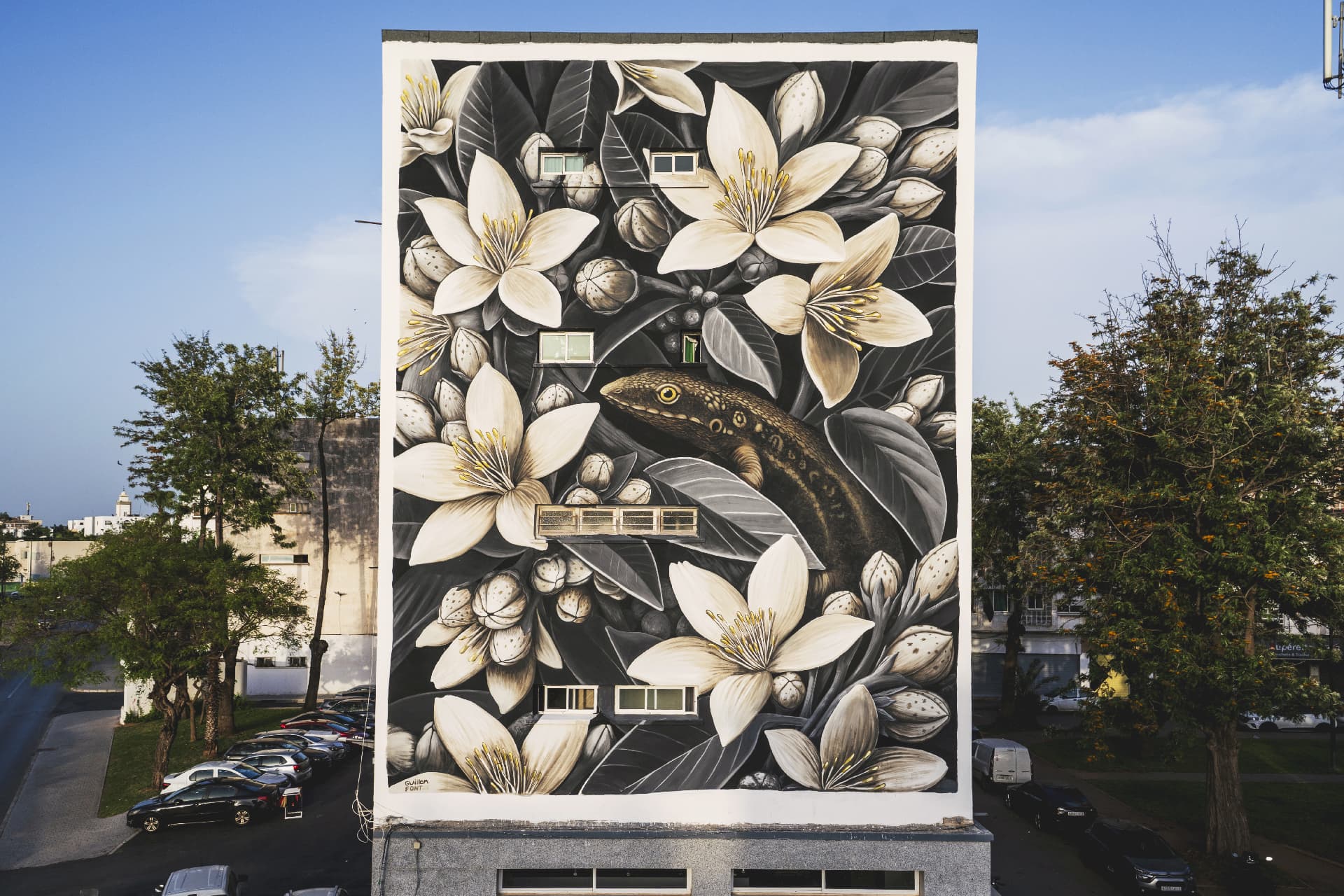
A traveling artist, Guillem Font treats the wall as a living sketchbook. His organic line work—situated between naturalistic illustration and visual journaling—adapts to each surface he encounters. Often working in black and white, he emphasizes detail and expressiveness, creating refined compositions that invite slow contemplation.